ateway Cities across Massachusetts have borne the brunt of harsh immigration enforcement over the past year. The negative consequences for children and families are apparent to all. Less visible, but potentially just as concerning, are the public safety implications if fear within immigrant communities makes residents less likely to seek help from law enforcement or cooperate with investigations.
Still, some may wonder whether there is an upside to the Trump administration’s immigration restrictions. As committed as Gateway Cities are to being welcoming and inclusive, they have absorbed especially large influxes of newcomers in recent years. Housing and energy costs are increasingly unaffordable, and schools are having to pair back staff. Perhaps a few years of lower immigration levels would ease some of these pressures?
This is the research question the MassINC Policy Center took on in a larger immigration study conducted in partnership with the team at Boston Indicators. We examined the relationship between immigration and three issues often at the center of public debate: housing costs, school performance, and wages for lower-skilled workers.
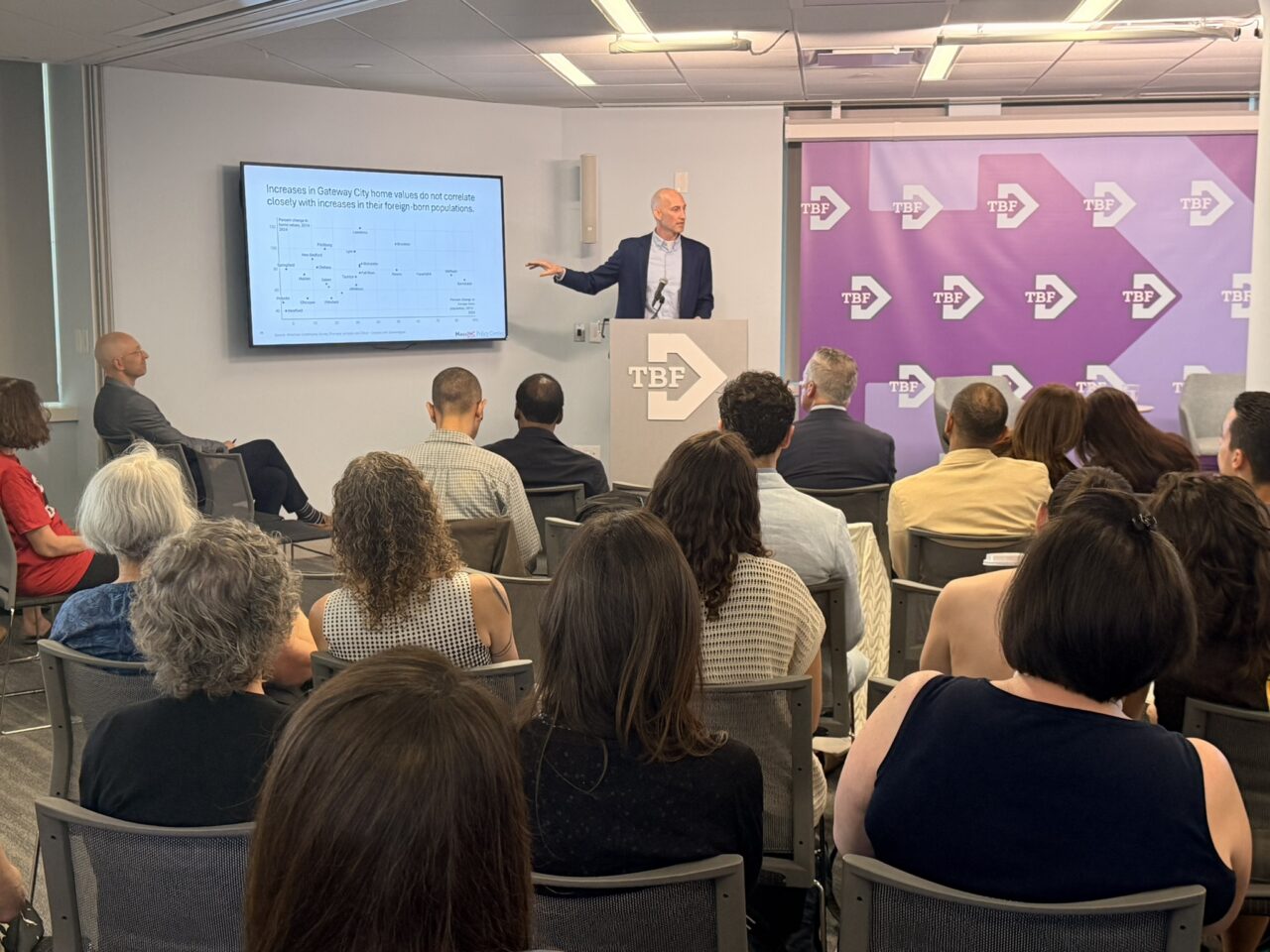
Our analysis found little evidence that immigration has contributed substantially to housing price increases. Revere foreign-born population increased by 50 percent between 2014 and 2024 and home values rose by 80 percent. But home values also rose by 80 percent in Springfield, which saw very little growth in its foreign-born population. The reasons why Gateway Cities residents are finding it increasingly difficult to pay their rent have less to do with immigration that other factors, such as increasing insurance premiums, interest rates, and materials costs.
Similarly, on the school side we found almost zero correlation between changes in test scores and growth in enrollment for students with limited English. This is likely because Massachusetts has done an excellent job providing extra funding to schools with many newcomers, and there is also evidence that striving immigrants, who often come to the US in search of educational opportunity, contribute positively to school culture and academic outcomes.
Lastly, we looked at the impact of immigrants on wages for low-skilled workers. Economists generally find that high-skilled workers benefit from high-skilled immigrants because they make their firms more competitive and all employees with stock options and other forms of compensation tied to performance share in the success. The effects of immigration for lower-skilled workers are more contested. However, across Gateway Cities, we found little evidence in correlational data that communities with larger populations of lower-skilled immigrants experience systematically lower wages among lower-skilled workers. To be sure, broad city-level comparisons may not capture impacts within specific industries. If immigrants are concentrated in sectors such as construction, wage effects may be more pronounced for some groups of workers than for others.
On balance, there is no question that immigration has been a tremendous boon to Gateway Cities in recent years. Immigrants have enlivened downtowns and main street business districts. They have repaired vacant and blighted housing and put it back to productive use. Their food, their art, and their cultural festivals bring new forms of vitality and energy for all to enjoy. And they are civically engaged and future-oriented.
From efforts to boost housing production and small business support to bilingual education and workforce training, Gateway City leaders have worked exceptionally hard to incorporate new Americans in ways that ensure these large flows provide a net positive.
In the coming years, the Massachusetts economy is going to feel the effects of an aging population. The pain will be especially intense in regions beyond Greater Boston. With the pipeline of immigrants arriving to the US narrowing to a trickle, Massachusetts will need to work harder than ever to attract newcomers.
Gateway Cities must continue to lead the way. And in order for them to perform this vital function, they will need a reliable state partner now more than ever. This includes fully funding the Student Opportunity Act, providing resources for small business technical assistance and public safety (line items that are often the first to go in tight state budgets), and boosting investment in housing programs that allow Gateway Cities to fill financial gaps and expand their housing supply as cost-effectively as possible.
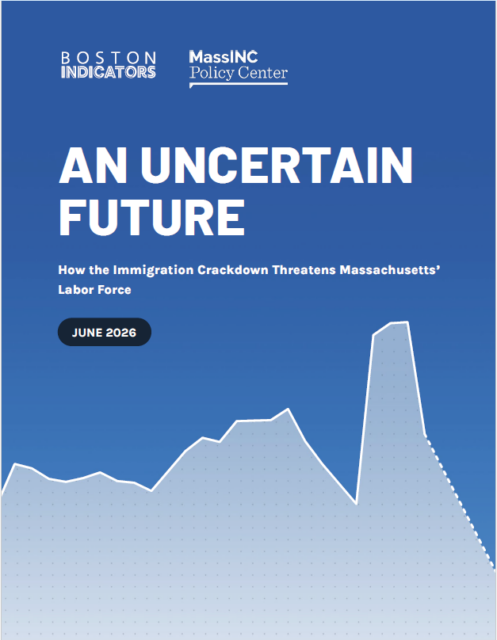
An Uncertain Future: How the Immigration Crackdown Threatens Massachusetts’ Labor Force, our latest report with Boston Indicators, examines how recent federal immigration restrictions could affect the Commonwealth’s workforce and broader economy. The analysis focuses on key industries where immigrant workers play an important role, highlighting potential challenges for employers, communities, and the state’s long-term economic stability at a time of increased federal policy uncertainty.
Read the report for a closer look at the data behind these workforce trends and what they could mean for Massachusetts’ economy.