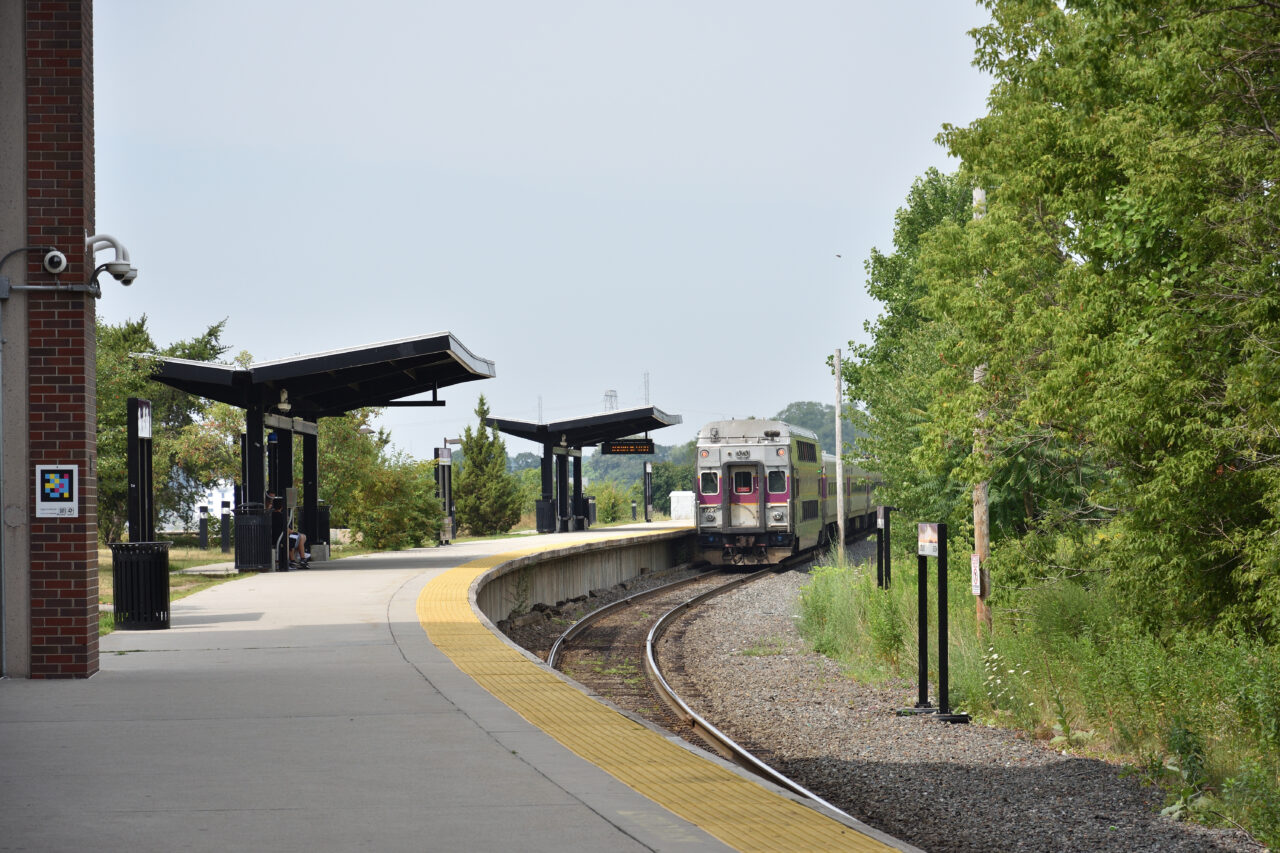
Until recently, the MBTA operated commuter rail largely as a suburban shuttle, running diesel trains into downtown Boston each morning and back out each evening. This model gave little consideration to Gateway City stations, treating them much like suburban park-and-rides rather than anchors for regional economies. Fortunately, our understanding of the commuter rail network and its potential has evolved considerably. Reports from MassINC, TransitMatters, and the MBTA’s own Rail Vision planning process have highlighted the network’s untapped potential to connect Gateway Cities and strengthen regional economies across Massachusetts.
The MBTA deserves considerable credit for using the disruption of the COVID-19 pandemic to jump start Regional Rail transformation. The agency redesigned schedules and lowered fares, making the system more useful for a wider range of trips. Riders responded by traveling more throughout the day. Reverse commuting increased. Passengers also began using the system more for shorter, local trips between stations.
The influx of riders and reshaped commuting patterns proves that latent demand for intercity train travel is real. With relatively modest schedule and fare changes, the MBTA has grown commuter rail ridership faster than any other system in the country since the pandemic. But we appreciate that outperforming the limited operating model of the past is a low bar for progress. Gateway Cities will not realize anything close to the network’s potential economic benefits until the MBTA delivers the faster, more frequent, subway-like service envisioned under a true Regional Rail system.
Achieving dramatically higher service and ridership levels does not require waiting decades for a mega-project. A recent joint report by the MassINC Policy Center and TransitMatters identified 10 targeted, moderately priced physical upgrades that will immediately increase service frequencies while building towards the long-term vision of Regional Rail.
These strategic investments fall into three primary categories:
- First, station improvements that increase access. Adding a new station in places like South Salem or renovating an existing station in regional centers like Lowell can attract thousands of new riders while spurring transit-oriented development in Gateway City downtowns.
- Second, strategic double-tracking eliminates bottlenecks, especially along the congested Old Colony lines serving Fall River, New Bedford, and Taunton. By adding additional sections of track in key areas, the MBTA can pass trains safely and provide faster and more frequent service to these regional urban centers.
- Finally, incorporating turn tracks at stations like Kendal Green on the Fitchburg Line or Reading on the Haverhill Line will enable the MBTA to run higher-frequency service through densely populated inner suburbs without obstructing express trains coming from further down the line.
Completing the 10 key projects identified in the report over a five-year period would require roughly $100 million more annually than the MBTA currently spends on commuter rail infrastructure. The state does not have a financial plan for this investment, but this may soon change. The FY 2027 budget includes $1 million for a comprehensive Regional Rail implementation study.
This plan represents a major opportunity for Gateway Cities. By identifying and estimating the cost of projects that will deliver meaningful service improvements, the MBTA can provide a clear roadmap for building Regional Rail. With a serious plan that identifies specific projects and their benefits, provides rigorous cost estimates, and lays out the steps required to deliver them within reasonable timeframes, Gateway City leaders can unite behind these investments and help the MBTA move them forward.
Get the latest updates on policy issues impacting Gateways Cities delivered right to your inbox.
The Gateway Cities Innovation Institute strengthens connections across communities and helps Gateway City leaders advance a shared policy agenda.