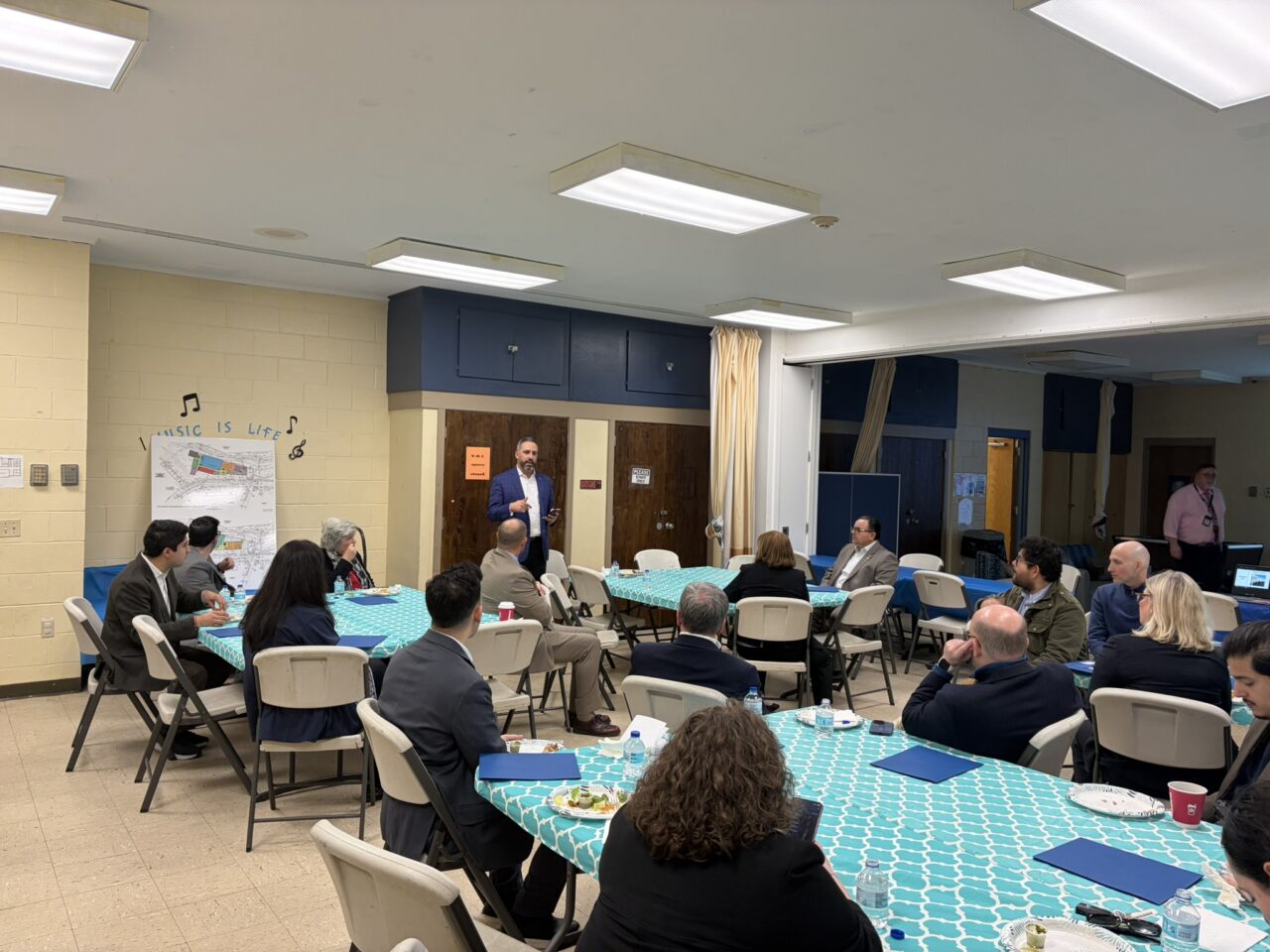
This spring, the MassINC Policy Center is partnering with the Legislature’s Joint Committee on Community Development and Small Businesses and the United Way to organize a tour exploring how cities can build stronger mixed-income neighborhoods and expand opportunity by aligning education, housing, and community development. Each stop will offer an up-close view of how School-Centered Neighborhood Development and Community Schools can provide more students and families with solid pathways to upward economic mobility across Massachusetts.
This page will be updated throughout the tour with key insights and lessons from each visit.
Lowell, MA
The power of Community Schools and the nexus with urban regeneration
On March 6, the Joint Committee on Community Development and Small Business traveled to Lowell virtually (ice and snow necessitated a quick shift to Zoom) to learn about the Spindle City’s burgeoning Community School movement. Lowell is the only Massachusetts school district to receive the US Department of Education’s Full-Service Community School grant. Over the past decade, it has taken advantage of this federal funding opportunity to build 10 community schools.
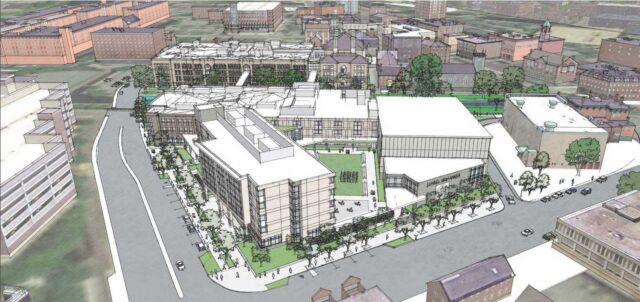
The virtual visit focused primarily on the efforts at Lowell High, our planned destination. With over 3,000 students, Lowell High is the largest secondary school in Massachusetts and it is currently undergoing a massive $400 million transformation. The city spent years debating whether to renovate the downtown campus or build a modern school on a new site. The decision to remain in downtown rested heavily on connecting the school to downtown institutions and the rich set of opportunities that they provide. The campus is also ideally situated to integrate with the Lowell Innovation Network Corridor (LINC) that the city is building in partnership with UMass Lowell.
Lowell’s efforts show how cities integrate city planning and redevelopment efforts with Community Schools, where engaged students, parents, and neighborhood residents take advantage of every opening to increase the opportunities available to youth and families.
Legislators who participated in the tour got a real taste for how two bills—one to provide core support for Community Schools and another to seed school-centered neighborhood development efforts that package Community Schools and long-term neighborhood revitalization efforts— have the power to create the environments that research tells us are essential to increasing economic opportunity for all.
Boston, MA
Umana: A model for building neighborhood by enriching the lives of students and families
A large delegation descended on the Mario Umana Academy in East Boston to learn about the school’s impressive efforts to build community at an especially challenging moment for a neighborhood. The PK-8 public school serves a largely immigrant East Boston neighborhood. In recent years, the community has been squeezed on all sides with gentrification, ICE raids, and the ups and downs of a post-pandemic economy.
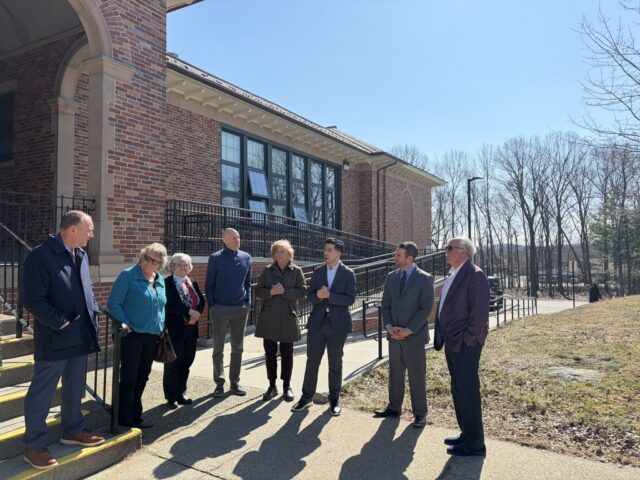
Employing the Community Schools frameworks, the Umana has provided a bulwark in these challenging times by giving residents a platform to engage positively in the betterment of their neighborhood. The school opens its doors to provide food, clothing, and other forms of aid to neighborhood residents. Equally important, it connects residents, provides opportunities for them to offer mutual support, and empowering them to organize an advocate on behalf of their children and families.
The visit gave us a chance to see and hear how they make this happen with strong backing from the district and a community-minded principal, who works hand-in-hand with an entrepreneurial Community School Coordinator.
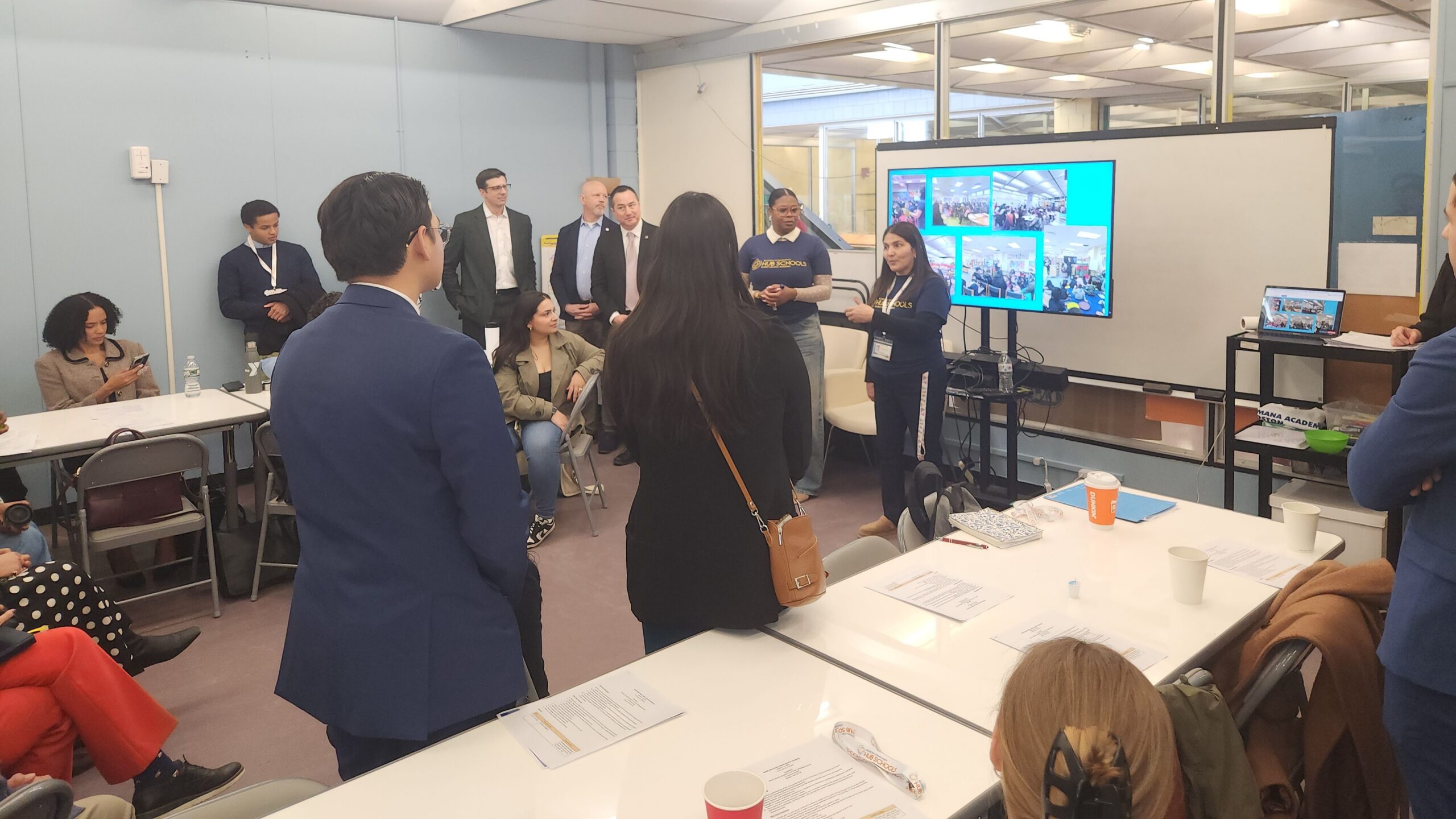
When the Umana became one of Boston’s 24 “Hub Schools” (the moniker Boston uses to describe its Community Schools), its enterprise account to provide enrichment services was in the red and the school had just three or four active partners. Today, Umana is generating $3 million annually in services that are procured or provided in-kind through nearly 80 community-based organizations. Partnerships include after school programming with Tenacity, a wrestling team led by Beat the Streets New England, and a new piano lab established with the Lang-Lang International Foundation. But it’s not just about bringing in resources from the outside, the Umana’s success is equally about residents pitching in to make the school a prized asset for the entire community. The delicious home-cooked meal that parents prepared for the visitors is a testament to the effort they contribute day in and day out.
Umana’s building makes it an especially exceptional community asset. The facility contains a pool, a large gymnasium, and space to meet other community needs, including childcare and ESOL classes for adults. Prior to the Community School transformation, many of these spaces were underutilized. Students, for example, we unable to utilize the pool. The Community School opened access to new resources. Members of the empowered school site council worked together with the principal to problem solve and make the formerly impossible, possible.
Upcoming Tour Locations
Stay tuned for more findings from across the state.
- March 27, 2026: New Bedford
- April 3, 2026: Springfield