The MassINC Policy Center has long sought to draw attention to the growing concentrations of poverty in Gateway City schools and the extreme consequences for both individuals and the social and economic fabric of our Commonwealth.
This work has often felt like screaming into the wind. Education leaders and policymakers largely ignore it. Instead, they focus on “school turnaround” and other policies that predictably fail to produce meaningful results. Meanwhile, improvements in research techniques provide a steady stream of evidence that segregation is the largest modifiable source of wide achievement gaps.
Perhaps the path to addressing this problem runs through the courts? This week Lawyers for Civil Rights, Brown’s Promise, and Willmer Hale took this step by filing a complaint on behalf of eight Gateway City students, including two from Brockton, two from Holyoke, one from Lawrence, one from Springfield, and two from Worcester.
Their landmark lawsuit feels like a watershed moment for Gateway Cities at a watershed moment for MassINC. We celebrated our 30th anniversary last week with partners from around the state. The room was full of jubilee—not because we are winning the battle for the middle class—but rather, because we are standing together strong and ready for the monumental fight that is clearly in the offing.
The first school desegregation case in a generation opens a new battlefield in the fight for the middle class in Massachusetts. Upward mobility and a strong middle class are clearly contingent on the quality of the public education that inclusive urban communities can provide.
As young Massachusetts households struggle mightily to become homeowners—a status that our recent survey shows many continue to see as a hallmark of the American dream—they increasingly flock to Gateway Cities. But they stand little chance of achieving the American Dream if high concentrations of poverty undermine the performance of their public schools, reducing their property values and making it more difficult for their children to gain the skills necessary for success in the state’s advanced industries.
Like previous visits this spring to neighborhoods in New Bedford and Worcester, community leaders in Springfield clearly understand the solution to high concentrations of disadvantage in their public schools is planning, housing, community development, and education policies constructed explicitly to create mixed-income neighborhoods and schools.
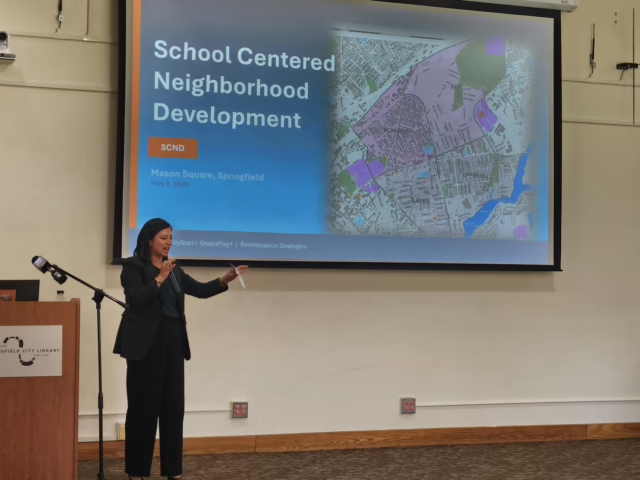
Earlier this month we had the opportunity to tour the school-centered neighborhood development effort taking shape in the Mason Square neighborhood of Springfield. The visit gave us an up-close look at a historic African American neighborhood that endured decades of disinvestment following redlining. We saw a new school and new affordable housing developments in the area, but unfortunately there has been no coordinated effort to link these investments to strengthen the neighborhood and schools following principles of school-centered neighborhood development.
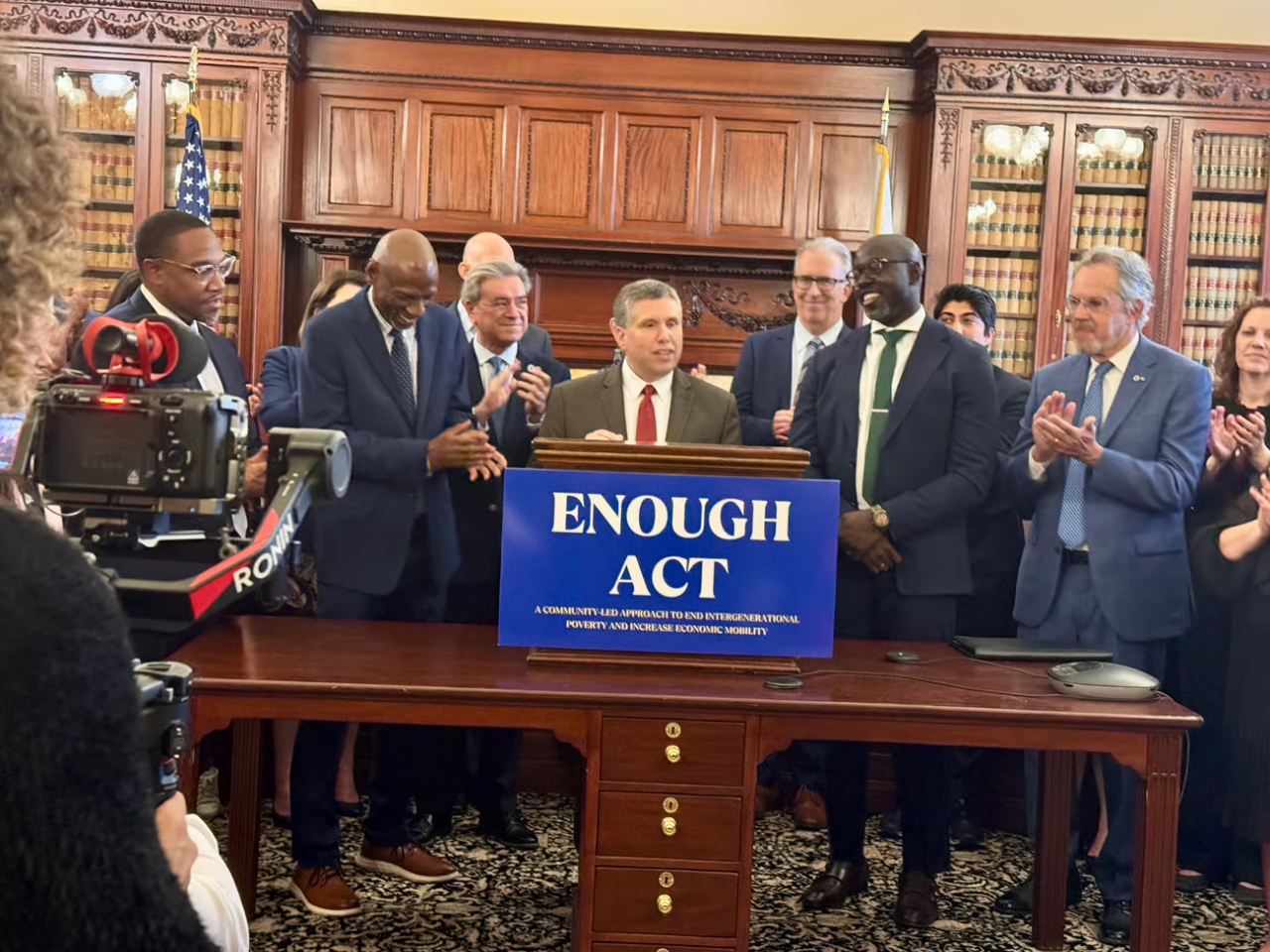
They are fueling a movement to create more economically integrated neighborhoods and schools. Last week, this effort got a big boost when Geoffrey Canada and his leadership team at the Harlem Children’s Zone came to the State House and stood with Gateway City leaders advocating for the ENOUGH Act. Modeled on similar legislation in Maryland, the bill would provide resources to placed-based initiatives that empower residents and give them the tools that they need to build wealth, while working together to improve their neighborhoods and schools.
While this a long-term approach, it is the only way to heal neighborhoods and reverse the historic legacy of redlining and other discriminatory policies that produce the segregation and associated inequities that we are still living with today. The new litigation should draw attention to these efforts and motivate Gateway City leaders to strive to show what is possible with vision and determination.