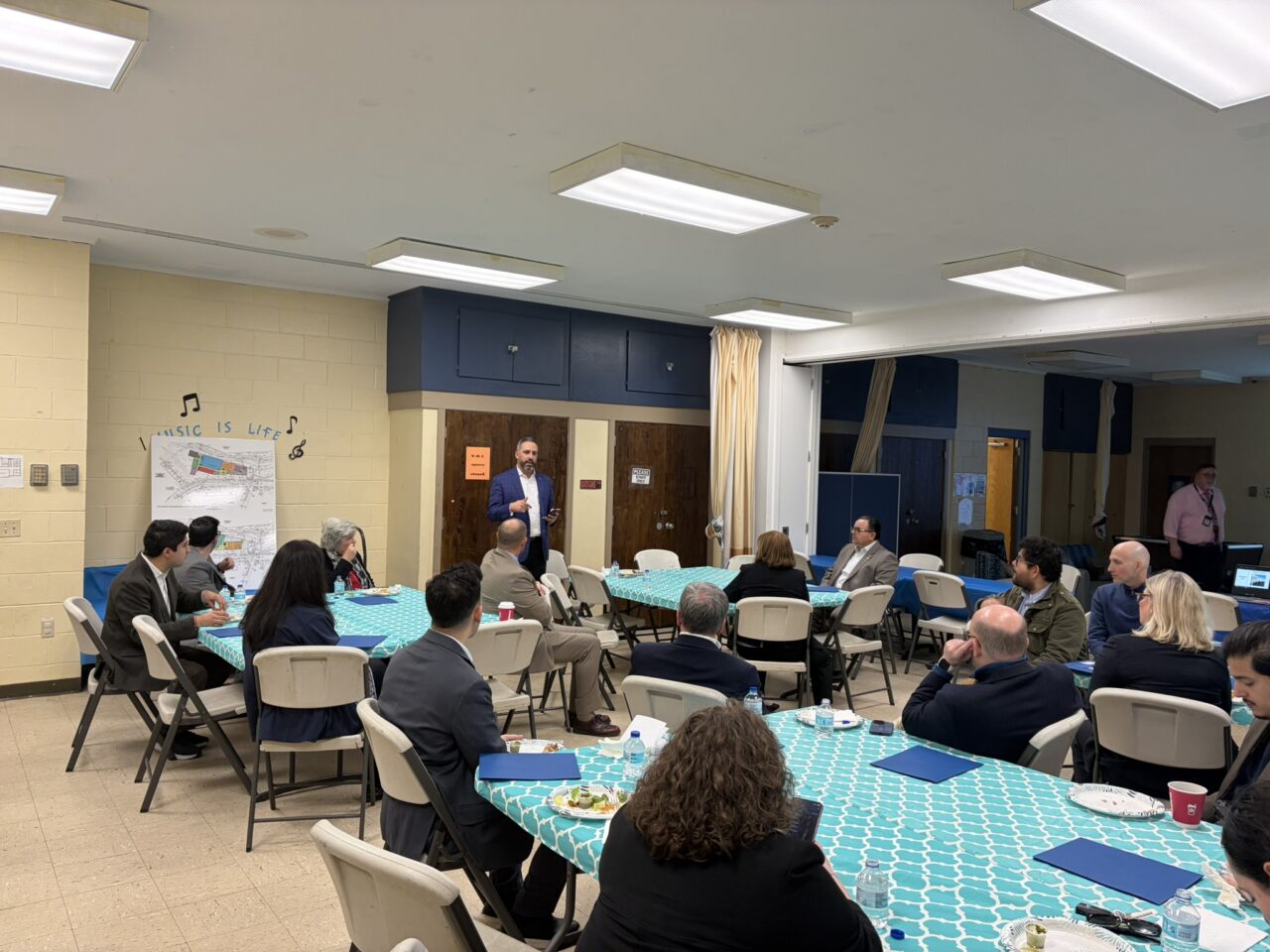
This spring, the MassINC Policy Center is partnering with the Legislature’s Joint Committee on Community Development and Small Businesses and the United Way to organize a tour exploring how cities can build stronger mixed-income neighborhoods and expand opportunity by aligning education, housing, and community development. Each stop will offer an up-close view of how School-Centered Neighborhood Development and Community Schools can provide more students and families with solid pathways to upward economic mobility across Massachusetts.
Lowell
The power of Community Schools and the nexus with urban regeneration
On March 6, the Joint Committee on Community Development and Small Business traveled to Lowell virtually (ice and snow necessitated a quick shift to Zoom) to learn about the Spindle City’s burgeoning Community School movement. Lowell is the only Massachusetts school district to receive the US Department of Education’s Full-Service Community School grant. Over the past decade, it has taken advantage of this federal funding opportunity to build 10 community schools.
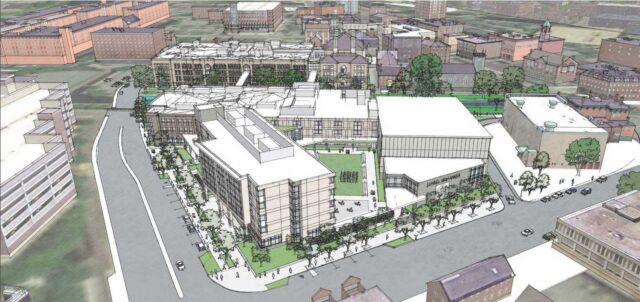
The virtual visit focused primarily on the efforts at Lowell High, our planned destination. With over 3,000 students, Lowell High is the largest secondary school in Massachusetts and it is currently undergoing a massive $400 million transformation. The city spent years debating whether to renovate the downtown campus or build a modern school on a new site. The decision to remain in downtown rested heavily on connecting the school to downtown institutions and the rich set of opportunities that they provide. The campus is also ideally situated to integrate with the Lowell Innovation Network Corridor (LINC) that the city is building in partnership with UMass Lowell.
Lowell’s efforts show how cities integrate city planning and redevelopment efforts with Community Schools, where engaged students, parents, and neighborhood residents take advantage of every opening to increase the opportunities available to youth and families.
Legislators who participated in the tour got a real taste for how two bills—one to provide core support for Community Schools and another to seed school-centered neighborhood development efforts that package Community Schools and long-term neighborhood revitalization efforts— have the power to create the environments that research tells us are essential to increasing economic opportunity for all.
Boston
Umana: A model for building neighborhood by enriching the lives of students and families
A large delegation descended on the Mario Umana Academy in East Boston to learn about the school’s impressive efforts to build community at an especially challenging moment for a neighborhood. The PK-8 public school serves a largely immigrant East Boston neighborhood. In recent years, the community has been squeezed on all sides with gentrification, ICE raids, and the ups and downs of a post-pandemic economy.
Employing the Community Schools frameworks, the Umana has provided a bulwark in these challenging times by giving residents a platform to engage positively in the betterment of their neighborhood. The school opens its doors to provide food, clothing, and other forms of aid to neighborhood residents. Equally important, it connects residents, provides opportunities for them to offer mutual support, and empowering them to organize an advocate on behalf of their children and families.
The visit gave us a chance to see and hear how they make this happen with strong backing from the district and a community-minded principal, who works hand-in-hand with an entrepreneurial Community School Coordinator.
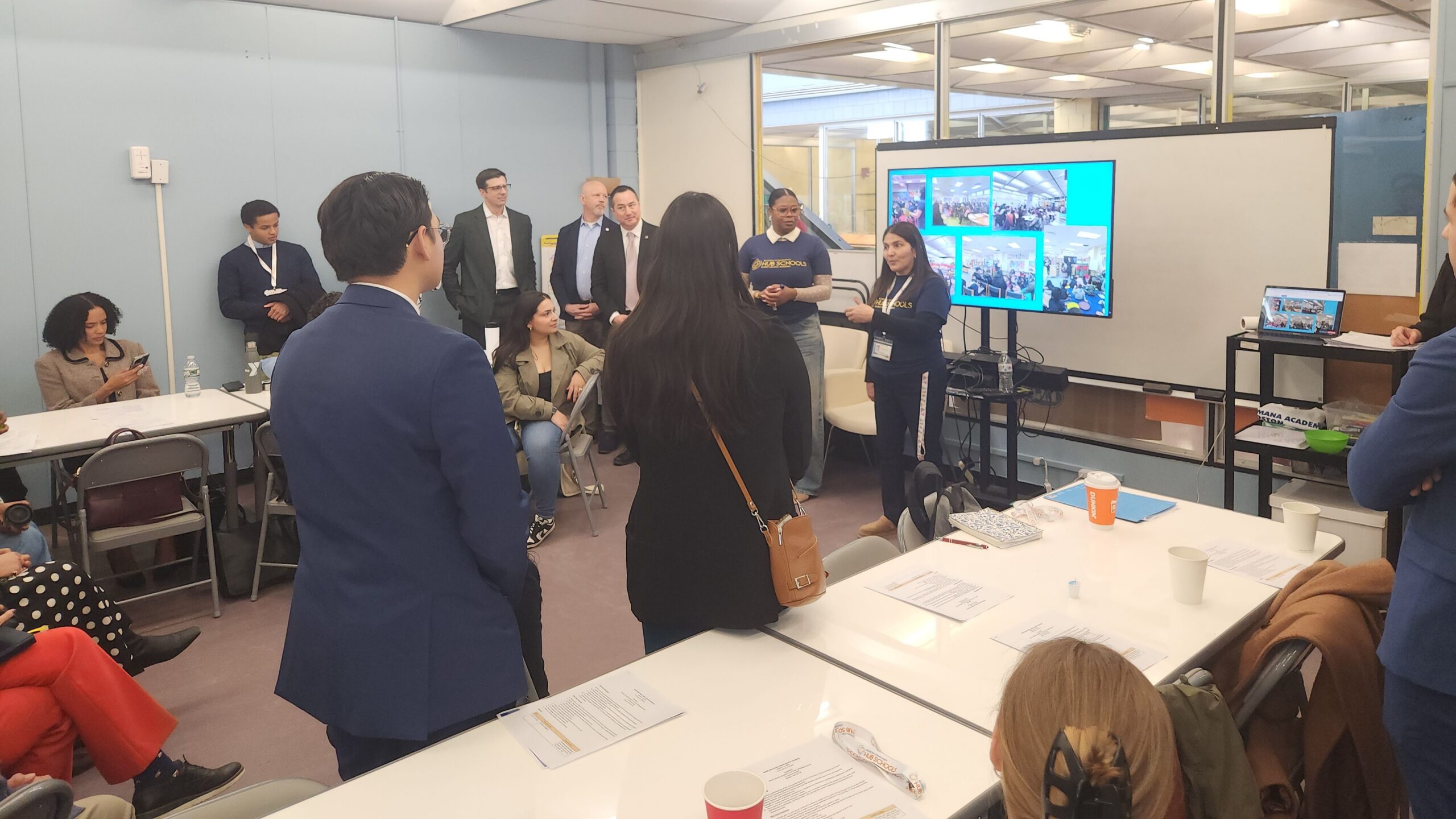
When the Umana became one of Boston’s 24 “Hub Schools” (the moniker Boston uses to describe its Community Schools), its enterprise account to provide enrichment services was in the red and the school had just three or four active partners. Today, Umana is generating $3 million annually in services that are procured or provided in-kind through nearly 80 community-based organizations. Partnerships include after school programming with Tenacity, a wrestling team led by Beat the Streets New England, and a new piano lab established with the Lang-Lang International Foundation. But it’s not just about bringing in resources from the outside, the Umana’s success is equally about residents pitching in to make the school a prized asset for the entire community. The delicious home-cooked meal that parents prepared for the visitors is a testament to the effort they contribute day in and day out.
Umana’s building makes it an especially exceptional community asset. The facility contains a pool, a large gymnasium, and space to meet other community needs, including childcare and ESOL classes for adults. Prior to the Community School transformation, many of these spaces were underutilized. Students, for example, we unable to utilize the pool. The Community School opened access to new resources. Members of the empowered school site council worked together with the principal to problem solve and make the formerly impossible, possible.
Worcester
Great Brook Valley: School-Centered Neighborhood Development through Revitalized Public Housing
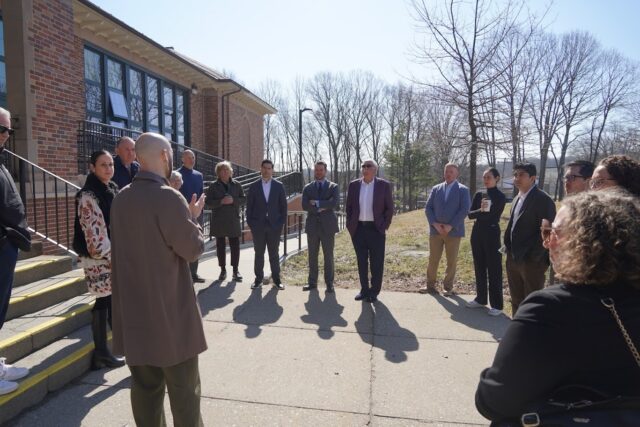
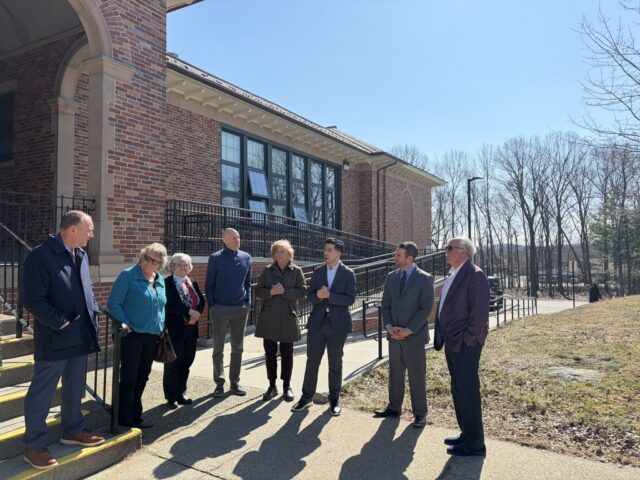
Leaders from Worcester greeted a delegation from the Joint Committee outside of the Lincoln Street School on a bright spring day. As they stood on the law in front of the local elementary, the neighborhood unfolded before them. Immediately to the west lay a large commercial development with a Lowe’s and other big box stores. Behind these buildings, the proud towers of the Lincoln Village Apartments. And off behind them, the Great Book Valley neighborhood, where many of children who attend the school call home.
Like so many public housing projects, Great Brook Valley was constructed to temporarily house returning veterans. The Worcester Housing Authority (WHA) has valiantly maintained these buildings for decades, but they are far past their intended life. Through a public-private partnership, the WHA is starting the long process of rebuilding them. We got an up-close look at the new neighborhood rising. With phased construction, Trinity Financial is working with WHA to replace 372 units in the Curtis Apartments section of the neighborhood with 527 modern units. Current residents will have the opportunity to return to these new homes and there will also be affordable homes for 155 new families earning up to 80 percent of the Area Median Income.
The new development will include an Economic Opportunity Center, where residents can come together for programs and events, as well as a new Great Brook Valley Branch of the Worcester Public Library. In addition, the city is currently completing a large new athletic field complex. The Boys and Girls Club of Worcester is also hoping to make a contribution to this effort with plans for a 37,000 square foot state of the art facility. The new recreation center will have the capacity to serve 500 children each day. It will include an ADA accessible swimming pool, a kids café, and a teen workforce development center.
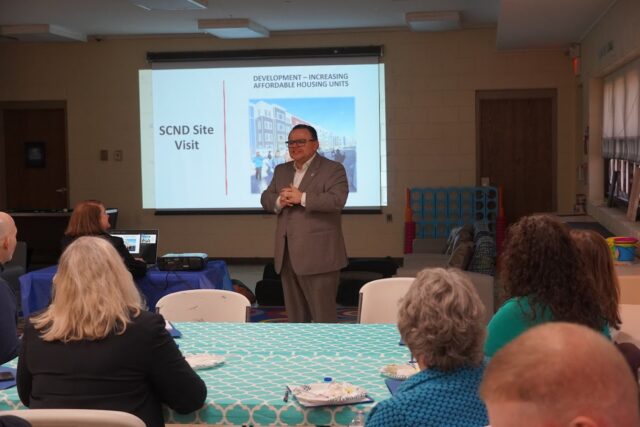
City Manager Eric Batista and WHA CEO Alex Corrales shared how the city has thoughtfully planned for the more than $2 billion of investment that will be generated in this dynamic neighborhood. The Lincoln Street school currently enrolls a population that is over 90 percent high-need. These ambitious cross-sector efforts will give Great Brook Valley children and families far more opportunities to thrive. Over time, their success will lead to a more economically-integrated community that is stronger and more resilient.
New Bedford
SCND lynchpins in New Bedford: A new school and a TOD corridor
If you were to ask an urban planner to draw a model neighborhood for school-centered neighborhood development, on paper, their design would look almost exactly like New Bedford’s Goulart Square. Members of the Joint Committee on Community Development had the opportunity to see this idyllic opportunity from the perfect perch: the windows of a future classroom in the new Congdon-DeValles school. From this vantage point, you could see how residential streets tightly packed with two- and three-family homes cocooned the building to the north, east, and west. Just south of the school lay Clarks Cove and the lapping waters of Buzzards Bay.
The Goulart Square neighborhood is already vibrant. It has a central park, a strong neighborhood main street commercial district, and while older, the housing stock is generally in good repair. But the area has some of the highest rates of youth poverty in the state. Low-income students make up nearly 80 percent of enrollment at Congdon and almost 90 percent at DeValles. New Bedford educators strive to support these students and position them for success, but there can be no doubt that that these extreme levels of income segregation harm children and undermine the community’s long-term economic foundation.
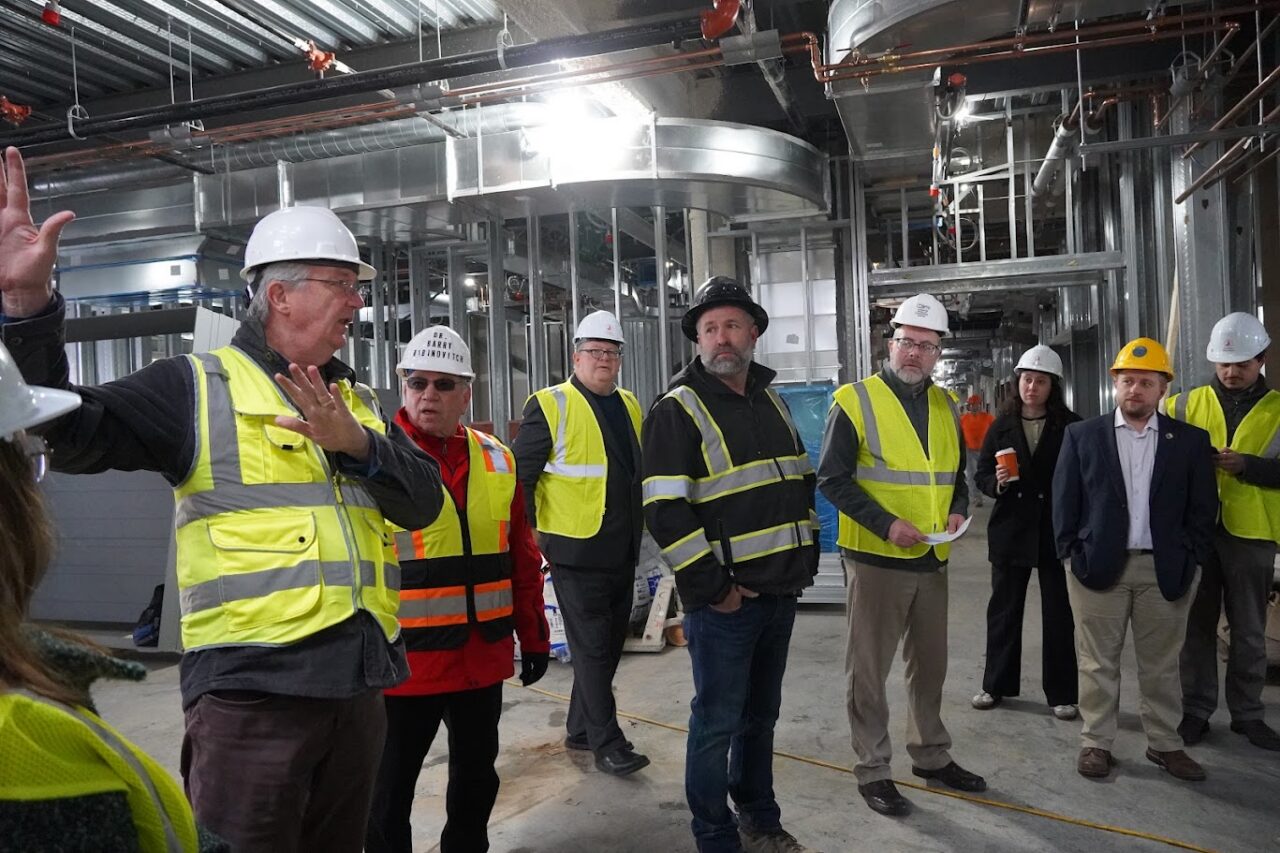
Along with the $120 million investment in the new school and neighborhood anchor, we saw numerous opportunities that New Bedford can leverage to nurture the growth of a mixed-income community and school. Goulart Square is ripe with opportunity for infill development to help meet the need for more housing; the former Congdon and DeValles school buildings seem particularly well-suited for adaptive reuse.
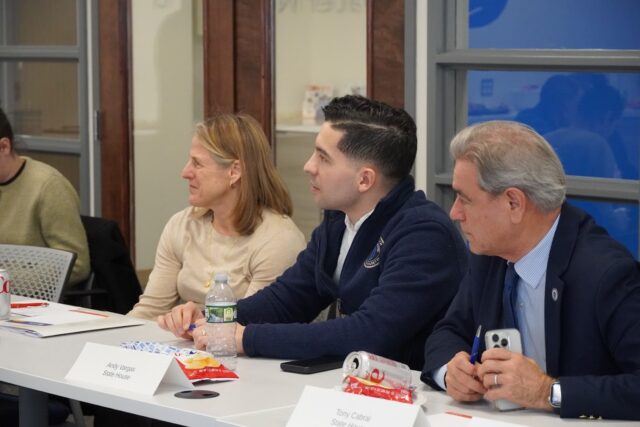
The United Way of New Bedford’s Chief Impact Officer, Sarah Rose, welcomed the tour to the organization’s office to discuss SCND strategies to act on these opportunities. Mayor Jon Mitchell and Supt. of Schools Andrew O’Leary described the many efforts underway to make New Bedford an exceptional place for children and families. Rep. Antonio Cabral, the lead author of An Act to Promote School-Centered Neighborhood Development, described how the legislation would help resource efforts to take advantage of investment in new school facilities.
Josh Amaral, the city’s Director of Housing and Community Development, provided a virtual tour of the Purchase Street TOD corridor. With the arrival of South Coast Rail, this downtown-adjacent neighborhood will likely see new investment that the city can strategically leverage to create a stronger community for children and families.
New Bedford has always been an innovative Gateway City that doesn’t shy away from projects that are difficult and long-term. If the longstanding silos between education and housing, community development, and urban planning can be broken down, leaders in New Bedford are likely to find the way.
From Pilot Efforts to Policy and Practice
Communities across Massachusetts are already testing new ways to connect schools and neighborhood development.
MassINC Policy Center’s new guide, Laying the Groundwork for School-Centered Neighborhood Development: A Guide to Backbone Organizations, provides a roadmap for turning these early efforts into sustained, coordinated strategies. It offers practical guidance on building backbone organizations, aligning cross-sector partners, and securing the resources needed to support children, families, and neighborhoods over the long term.