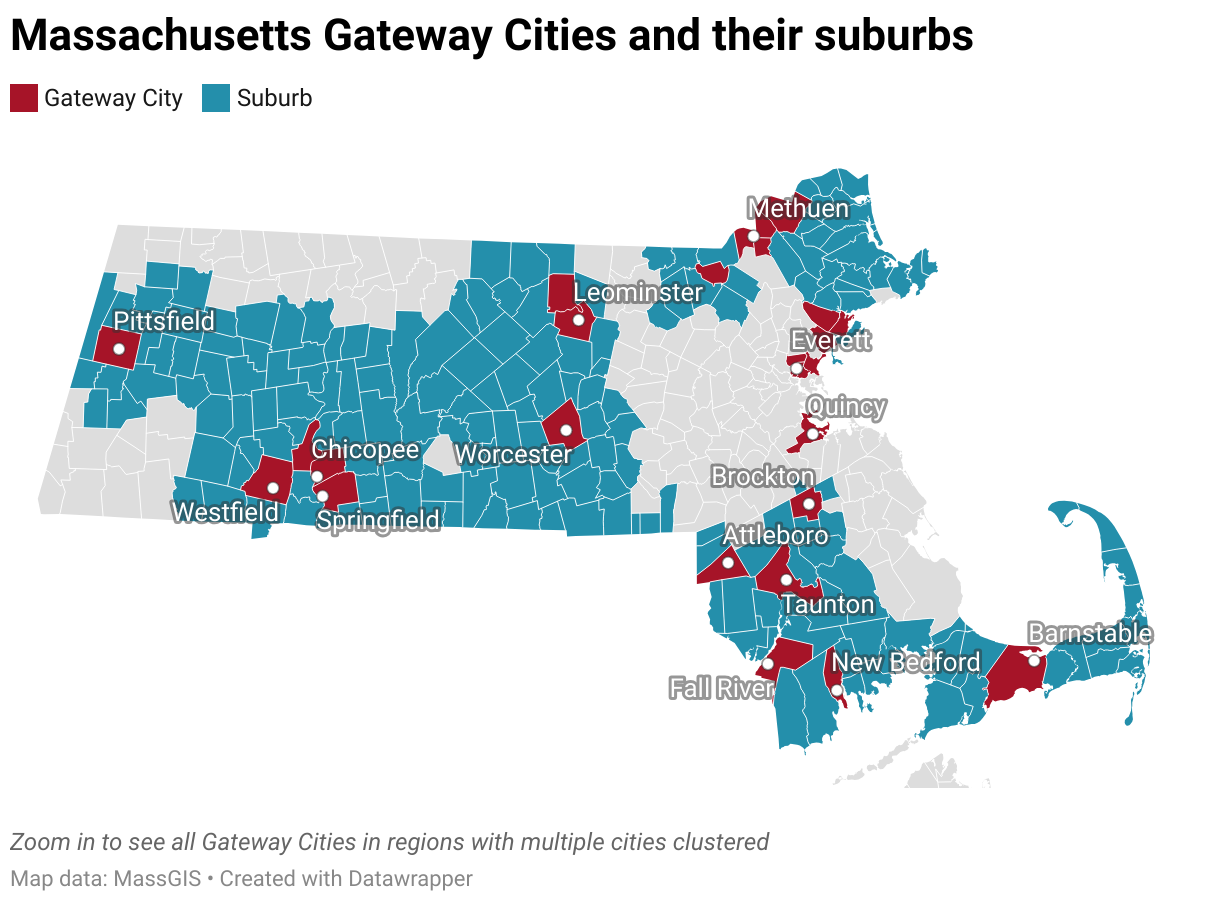
About the Gateway Cities
Gateway Cities are small and midsize urban centers that anchor regional economies across Massachusetts—and have long served as gateways to economic opportunity for generations of residents.
In 2007, MassINC’s landmark report, Reconnecting Massachusetts Gateway Cities: Lessons Learned and an Agenda for Renewal, coined the term “Gateway Cities” and helped launch a statewide movement to invest in these communities’ futures. The research laid the groundwork for the state’s Gateway Municipalities designation, recognizing the shared challenges, enduring assets, and economic importance of Massachusetts’ regional cities.
Gateway Cities are midsize urban centers that anchor regional economies around the state. For generations, these communities were home to industry that offered residents good jobs and a “gateway” to the American Dream. More recently, Gateway Cities have been reinventing themselves—at times in the face of considerable economic and social challenges.
The Gateway Cities Innovation Institute believes in a bright future for these communities. They retain many assets with unrealized potential, including walkable neighborhoods and downtowns; young people and essential workers; existing infrastructure and transportation networks; and anchor institutions such as museums, hospitals, and universities. Through continued research and collaboration with local leaders, we work to turn that potential into policies and investments that expand opportunity across Massachusetts’ 26 Gateway Cities.

What Makes a Gateway City?
Massachusetts law establishes three criteria for the Gateway municipality designation:

Population
More than 35,000 residents and fewer than 250,000.

Median Household Income
Median household income below the statewide average.

Educational Attainment
A share of residents with a bachelor’s degree or higher below the statewide average.
By the Numbers
Gateway Cities are central to Massachusetts’ future, connecting regional economies and communities across the Commonwealth.
26
Gateway Cities across Massachusetts
1.9 million
people live in a Gateway City
27%
of Massachusetts residents live in Gateway Cities
38%
of the state’s foreign-born residents live in Gateway Cities
45%
of Massachusetts residents of color live in Gateway Cities
43%
of the state’s low-income residents live in Gateway Cities
Why Gateway Cities Matter
Massachusetts cannot build a strong middle class without strong Gateway Cities. These regional centers connect residents to jobs, education, housing, and essential services—and their success benefits businesses and communities well beyond their borders.
Their historic downtowns, transportation networks, housing, and anchor institutions provide a foundation for growth. Their diverse communities, entrepreneurs, young people, and essential workers are equally vital to the Commonwealth’s future. Investing in these assets can help Massachusetts expand economic opportunity while supporting the people who already call Gateway Cities home.
Through research and collaboration with local leaders, MassINC works to advance policies and investments that strengthen these communities. The goal is lasting pathways to the middle class and a more prosperous Commonwealth.