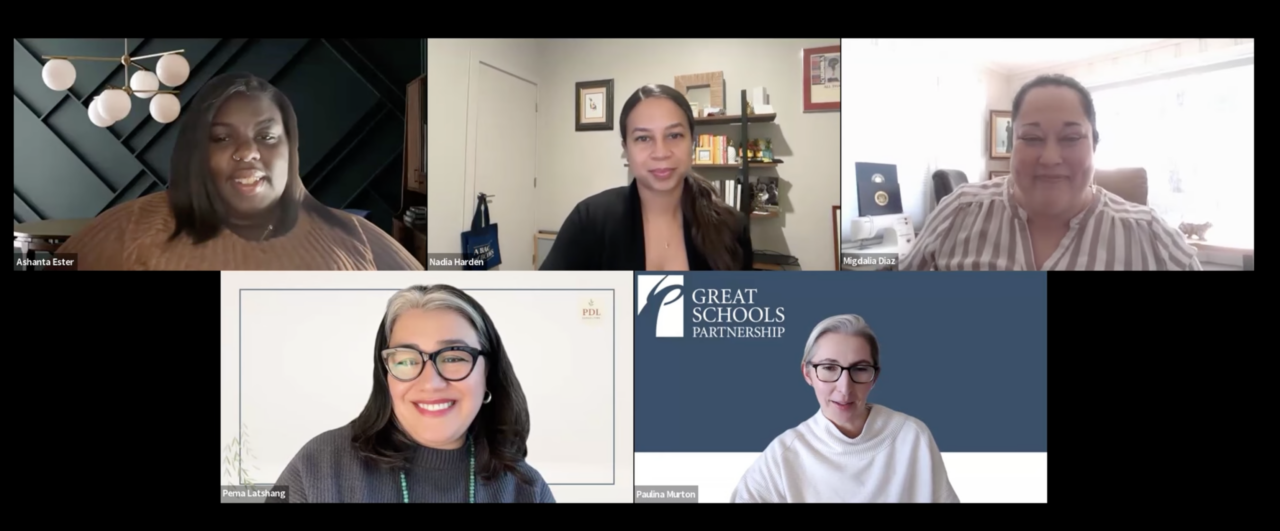
On February 24, the MassINC Policy Center hosted a virtual conversation exploring how regional nonprofits can drive systems change in education. The event featured a presentation of a new case study authored by Pema Latshang, Greg Torres Senior Fellow and founder of PDL Consulting, followed by a panel discussion with leaders working across philanthropy, policy, and practice.
Together, the speakers examined how intermediary organizations can convene partners, strengthen educator pipelines, and address structural barriers that contribute to inequities in the education workforce.
Presentation: Lessons from Teach Western Mass
The event opened with a presentation by Pema Latshang, Greg Torres Senior Fellow and the founder and former executive director of Teach Western Mass. She shared findings from her case study examining the regional initiative focused on strengthening educator recruitment, preparation, and retention across Western Massachusetts.
Latshang described how regional intermediaries like Teach Western Mass help coordinate stakeholders—including school districts, higher education institutions, nonprofits, and funders—to address challenges that no single institution can solve alone. Rather than operating as a stand-alone program, these organizations work to align strategies, build shared goals, and strengthen regional capacity for change.
Her case study highlighted several key insights:
- Regional collaboration is essential to tackling educator shortages and improving workforce diversity.
- Trust and sustained relationships among partners are critical for long-term progress.
- Intermediary organizations act as connectors, linking educators, institutions, and funders to build coordinated strategies.
- Systems change takes time, often requiring patience and persistence as partners shift from short-term program outcomes to longer-term structural solutions.
Latshang emphasized that meaningful progress often happens behind the scenes through convening partners, facilitating collaboration, and helping organizations align their efforts around shared goals.
Panel Discussion: Perspectives from Practice, Policy, and Philanthropy
Following the presentation, Latshang moderated a panel discussion featuring Migdalia Diaz, Chief Operating Officer of Latinos for Education and Interim Executive Director of Latinos for Education Massachusetts; Nadia Harden, Chief of Staff at the New Commonwealth Fund; Paulina Murton, Executive Director of the Great Schools Partnership; and Ashanta Ester, a Teach Western Mass Residency alum and special education teacher in Holyoke Public Schools.
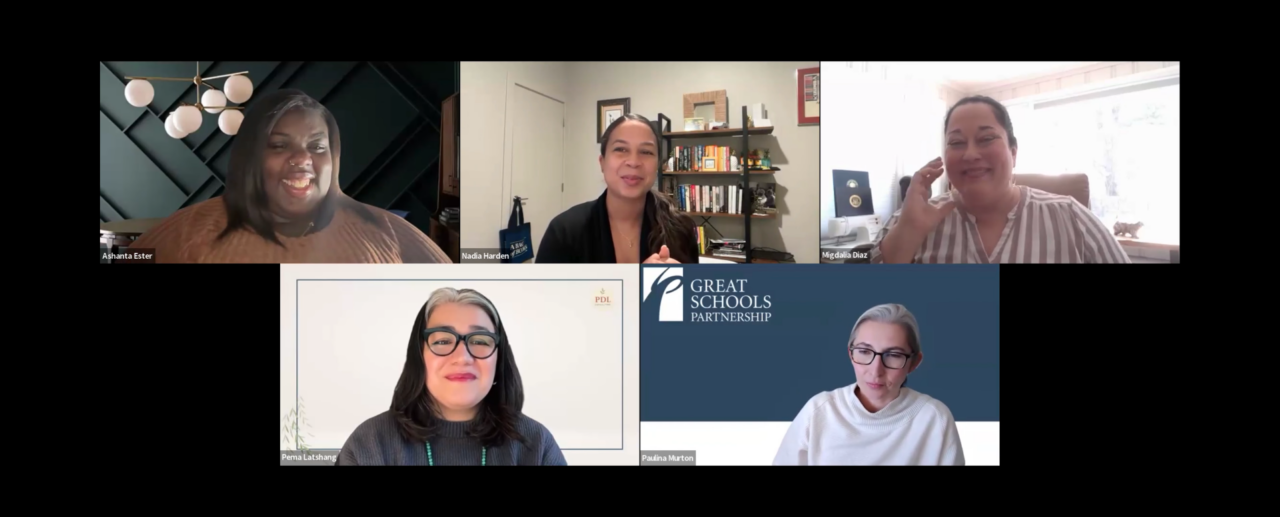
The conversation explored how different parts of the education ecosystem—advocacy organizations, philanthropy, intermediary nonprofits, and educators—work together to move systems change forward.
A key theme in the discussion was the role of policy and advocacy in strengthening educator pipelines. Migdalia Diaz highlighted the work of Latinos for Education, including the organization’s leadership in advancing the Educator Diversity Act in Massachusetts. She noted that building a more representative educator workforce requires alignment across policy, higher education, and school systems, and emphasized the importance of coordinated advocacy to expand pathways for educators of color and address systemic barriers to entering and remaining in the profession.
The conversation also examined how philanthropy can support long-term change. Drawing on her perspective at the New Commonwealth Fund, Nadia Harden discussed how funders can play an important role in supporting collaborative initiatives like Teach Western Mass. Philanthropic investment, she noted, often helps bring partners together and sustain early-stage work while regional strategies take shape. Supporting systems change requires patience and trust, as progress often unfolds through relationship-building and sustained coordination rather than immediate program outcomes.
Another perspective focused on the role of regional intermediary organizations in connecting research, policy, and classroom practice. Paulina Murton shared insights from the Great Schools Partnership, which works with educators and districts across New England to advance equitable teaching and learning through diversifying the educator workforce. Their success in cities such as Springfield, show the importance of collaborating with community input at the center. She discussed how organizations like Great Schools Partnership help convene networks of educators, facilitate shared learning, and support districts as they implement reforms that improve outcomes for students.
Grounding the conversation in the day-to-day realities of teaching, Ashanta Ester reflected on her experience as a graduate of the Teach Western Mass residency program and her current work as a special education teacher in Holyoke Public Schools. She emphasized the importance of strong preparation programs, mentorship, and professional support for new educators entering the field. Her perspective reinforced the importance of ensuring that educators themselves remain central to conversations about workforce development and systems change.
Across the discussion, panelists returned to several shared themes: the importance of regional collaboration, the value of intermediary organizations in connecting stakeholders, and the need for sustained investment to support long-term change in the education system.
Looking Ahead
The event underscored the value of bringing together leaders from across sectors to examine how systems change happens in practice. By combining research, advocacy, philanthropic investment, and educator leadership, regional initiatives like Teach Western Mass offer a model for addressing workforce challenges and advancing educational equity.
MassINC will continue exploring these issues through the Greg Torres Senior Fellows program and future conversations and reports focused on strengthening education systems across Massachusetts.
About the Case Study
Case Study: Teach Western Mass explores how a regional nonprofit worked to grow a more diverse, high-quality teacher workforce in the Pioneer Valley through culturally responsive recruitment and a teacher residency program. It highlights early wins in collaboration and educator pipeline development, and the reality that limited capacity forced a strategic shift from broad systems change to focused program work.
The report offers practical lessons for funders and policymakers on supporting small organizations driving long-term equity efforts.

Case Study: Teach Western Mass
December 12, 2025