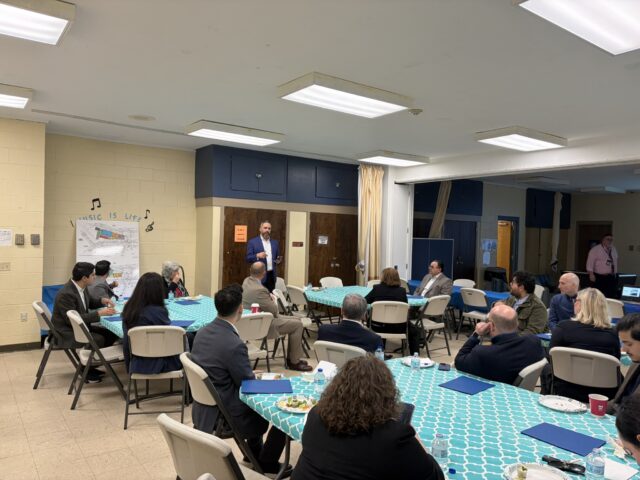
Ben Forman is the Director of MassINC’s Policy Center. He coordinates the development of the organization’s research agenda and oversees production of research reports. Ben has authored a number of MassINC publications and he speaks frequently to organizations and media across Massachusetts. With a background in urban revitalization and sustainable growth and development, he is uniquely suited to the organization’s focus on strong communities and economic security.
Prior to joining MassINC in 2008, Ben oversaw strategic planning for the District of Columbia Department of Parks and Recreation, a large agency providing critical services to youth and families in neighborhoods throughout the city. He also worked as a research assistant at the Brookings Institution Metropolitan Policy Program in Washington, DC and Nathan Associates, a global economic development consulting firm.
As a graduate student, Ben was awarded a Rappaport Public Policy Fellowship and served in the City of New Bedford’s planning department. He also worked as a graduate research assistant on a multi-year longitudinal analysis measuring the impact of new information technologies on neighborhood social networks.
Ben graduated from Trinity College, Hartford with a bachelor’s degree in economics. He completed his master’s degree in city planning at the Massachusetts Institute of Technology.
-

Gateway Cities Journal — Update — Gateway Cities
Gateway City students and educators receive good news at Early College Day 2026
Early College Day 2026 highlighted major state commitments to expand access and strengthen coordination across K–12 and higher education, signaling a shift toward a more robust, systemwide approach.
April 13, 2026
-

-

Gateway Cities Journal — Gateway Cities
Turning potential into place-based investment
Targeted investments in Gateway City growth districts can unlock private development and strengthen regional economies across Massachusetts.
March 10, 2026
-

-
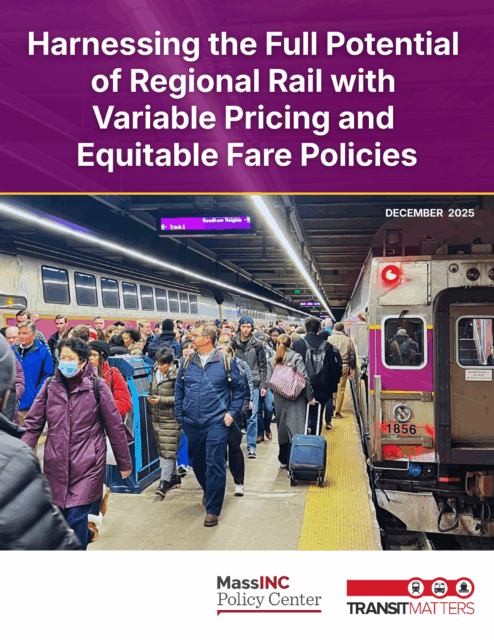
Harnessing the Full Potential of Regional Rail with Variable Pricing and Equitable Fare Policies
This analysis outlines a practical path to increasing ridership and expanding access on the commuter rail through variable pricing and more equitable fare structures. The report shows how Massachusetts can make measurable progress toward Regional Rail by leveraging existing system capacity to strengthen economic mobility across the Commonwealth.
December 9, 2025
-

Gateway Cities Journal — Gateway Cities
Gateway Cities Journal | Legislative hearing focuses on empowering Gateway City residents with Community Schools
Gateway City leaders filled Beacon Hill to champion a new Community Schools Commission that could help scale a model proven to strengthen neighborhoods, deepen trust, and expand opportunity for children and families.
November 14, 2025
-

Gateway Cities Journal — Gateway Cities
Gateway Cities Journal | School-Centered Neighborhood Development has its day on Beacon Hill
Gateway City leaders push for policies that link schools, housing, and community development to create vibrant, mixed-income neighborhoods where families and students can thrive.
October 16, 2025