Research
Browse research releases from the MassINC Policy Center.
Explore Topics
-
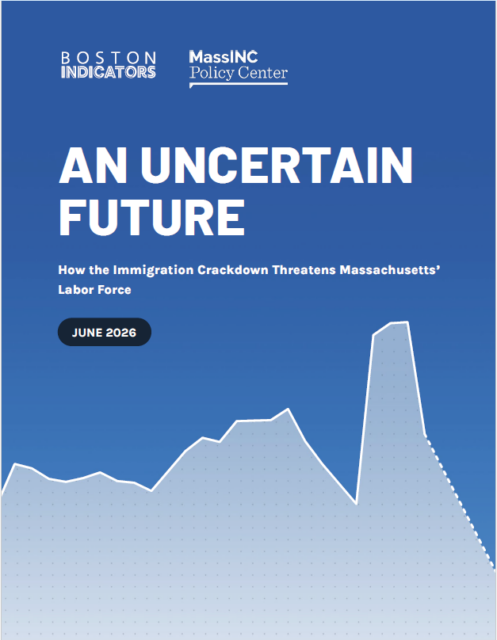
An Uncertain Future: How the Immigration Crackdown Threatens Massachusetts’ Labor Force
Recent federal immigration restrictions could have significant implications for Massachusetts’ economy and labor force. While much of the public discussion has focused on the human impact of these policies, this report examines their potential economic effects, with particular attention to labor force dynamics in three key industries. The analysis comes at a time of heightened uncertainty for the Massachusetts economy, as shifts in federal policy — including changes to research funding and the social safety net — may further affect the state’s workforce, employers, and communities.
June 4, 2026
-
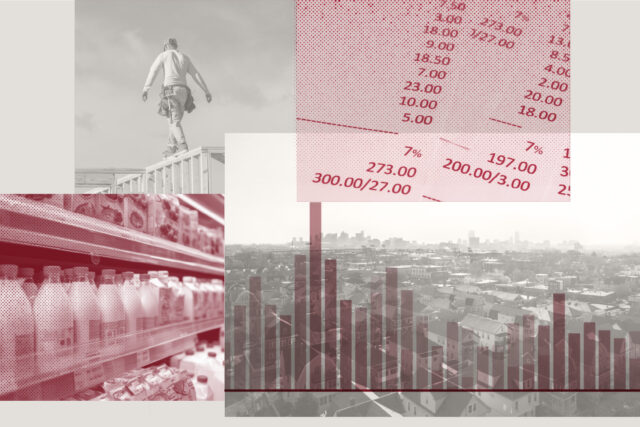
The Massachusetts Middle Class Status Report
As MassINC marks its 30th anniversary, the Massachusetts Middle Class Status Report revisits a foundational question: whether households in Massachusetts can achieve economic security, stability, and full participation in civic life. Using a multidimensional economic capacity framework, the report offers a rigorous, data-driven assessment of whether the Commonwealth’s economy is delivering broadly shared prosperity.
January 28, 2026
-

Case Study: Teach Western Mass
Vital lessons for systems change initiatives seeking to solve education equity challenges.
December 12, 2025
- Teach Western Mass (TWM) built culturally responsive training and recruitment programs that expanded access to teaching and increased educator diversity in Holyoke and Springfield.
- In partnership with school districts, colleges and universities, and the state education agency, Teach Western Mass helped elevate educator workforce and diversity as a shared regional priority.
- TWM’s early ambitions to change systems to expand the regional educator pipeline delivered impact, but limited capacity ultimately required the organization to focus on its teacher residency training program.
- This case study underscores the challenges that small nonprofits face mounting long-term system-change efforts.
-
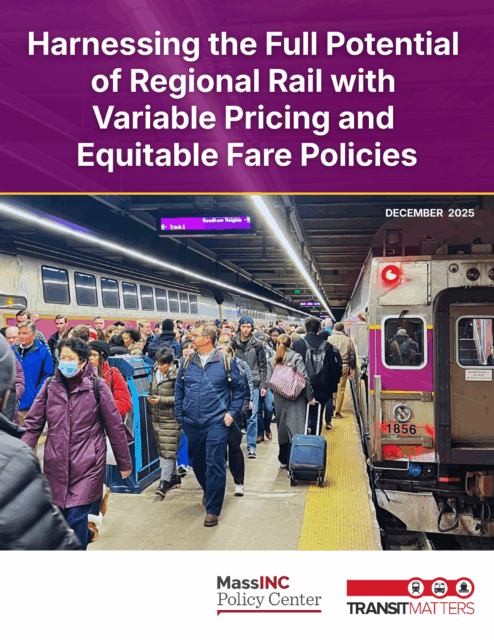
Harnessing the Full Potential of Regional Rail with Variable Pricing and Equitable Fare Policies
This analysis outlines a practical path to increasing ridership and expanding access on the commuter rail through variable pricing and more equitable fare structures. The report shows how Massachusetts can make measurable progress toward Regional Rail by leveraging existing system capacity to strengthen economic mobility across the Commonwealth.
December 9, 2025
-
Fixing the Foundation: Uneven Access to Modern Schools and a Blueprint for a More Equitable Future
This report examines disparities in school facility conditions across Massachusetts and their implications for student learning.
October 7, 2025
- Nearly 60% of Massachusetts’ lowest-rated or over-capacity schools are located in Boston or a Gateway City.
- At the current pace, it could take 50 years to replace or renovate all high-need school buildings in Massachusetts.
- Suburban districts received 57% of major MSBA Core Program grants since 2015, while Boston and Gateway Cities received less than 19%.
-

2025 Gateway Cities Housing Monitor
The MassINC Policy Center’s annual deep dive into the housing trends shaping opportunity and growth across Massachusetts.
September 17, 2025
-
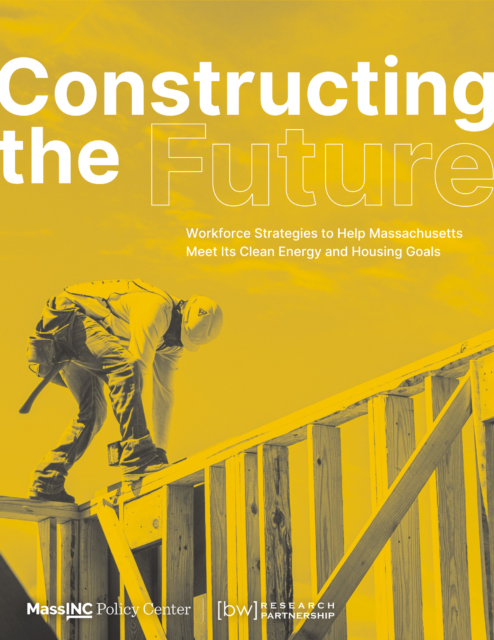
Constructing the Future: Strategies to Help Massachusetts Meet Its Clean Energy and Housing Goals
June 17, 2025
- Construction output has declined in recent years. Prompt action to stimulate demand is necessary to sustain this critical workforce and preserve long-term industry capacity.
- Assuming continued economic growth, scaling up the training system to meet workforce needs for housing and clean energy should be an attainable goal.
- Recent progress in racial, ethnic, and gender diversity presents an opportunity to expand the industry’s future labor pool.
- Reducing construction costs while maintaining competitive, family-sustaining wages will require meaningful gains in productivity.